
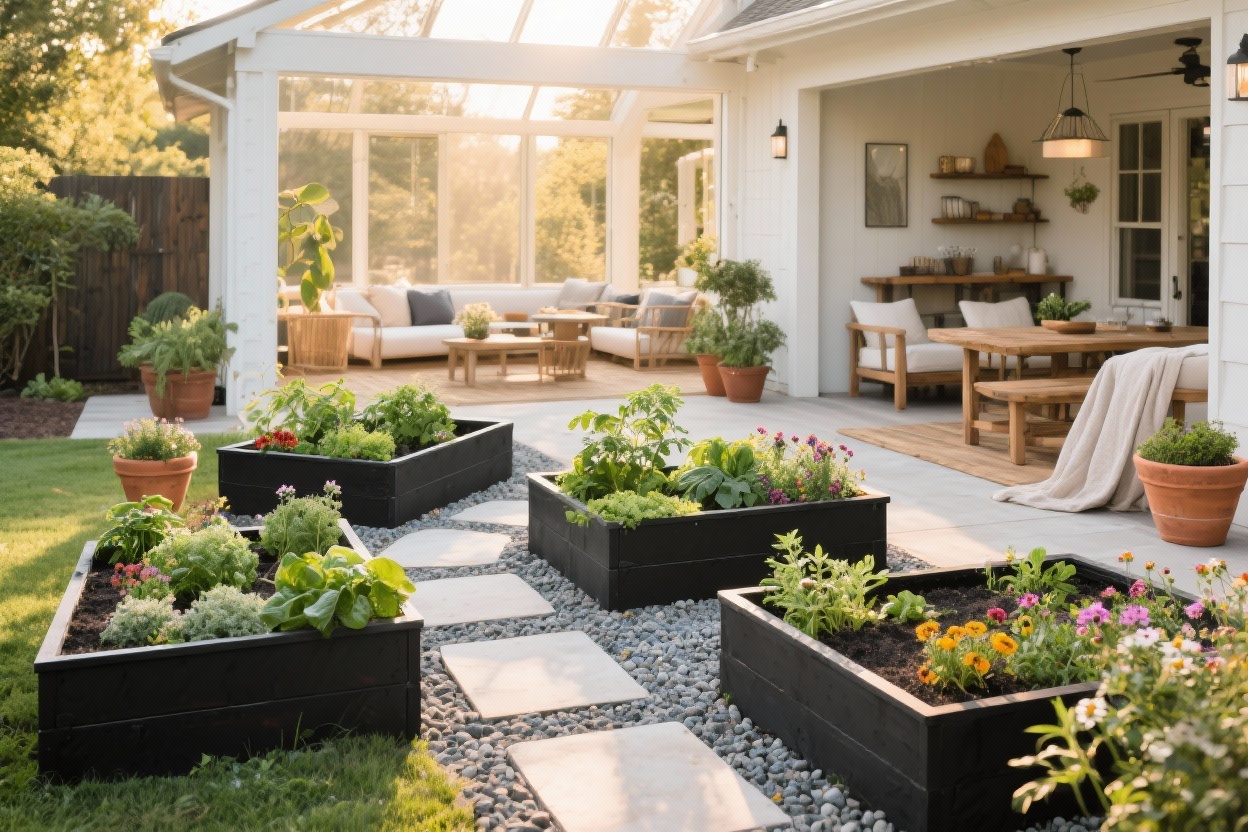
Ready to turn your backyard into a mini paradise? These raised garden bed layouts don’t just grow food—they look gorgeous doing it. Think clean lines, lush textures, and those satisfying “wow” moments every time you step outside.
Below, you’ll find seven complete layout ideas with specific shapes, materials, plant pairings, and decor details. Picture-perfect beds, tidy paths, and just enough style to make your neighbors peek over the fence.
1. The Modern Grid Courtyard
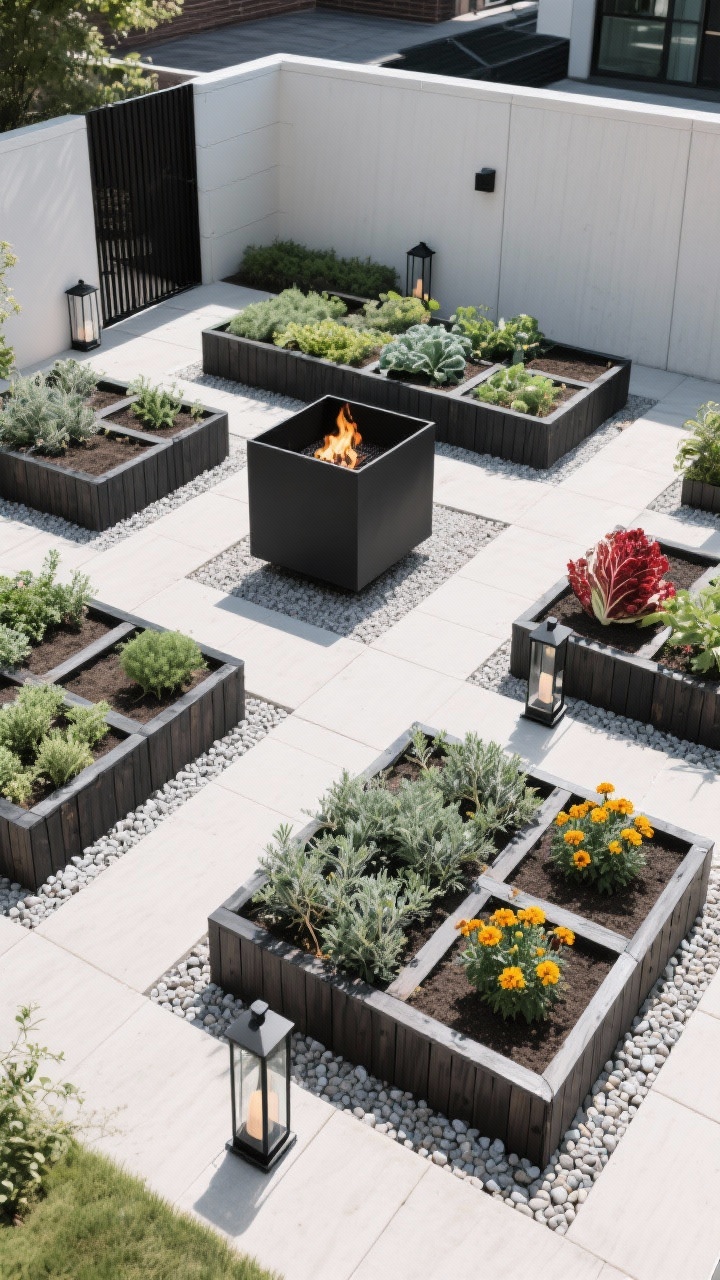
This one is for fans of clean lines and crisp geometry. Imagine four to six square beds arranged in a tidy grid with smooth gravel in between. The look is sleek and urban—almost like a minimalist courtyard.
Use black powder-coated steel or charred cedar (shou sugi ban) for the bed frames. Keep edges squared and heights uniform—about 12–16 inches—so the grid feels intentional and sculptural.
- Plants: Boxy herbs (thyme, oregano), dwarf kale, red romaine, and marigolds for color pops.
- Paths: Pale pea gravel or decomposed granite with steel edging for razor-sharp lines.
- Decor: A single low fire bowl or cube planter in the center as a focal point, plus matte-black lanterns.
The vibe is polished but not precious. Bonus points for a hidden drip line that keeps the grid pristine.
2. The Cottage Patchwork Parterre
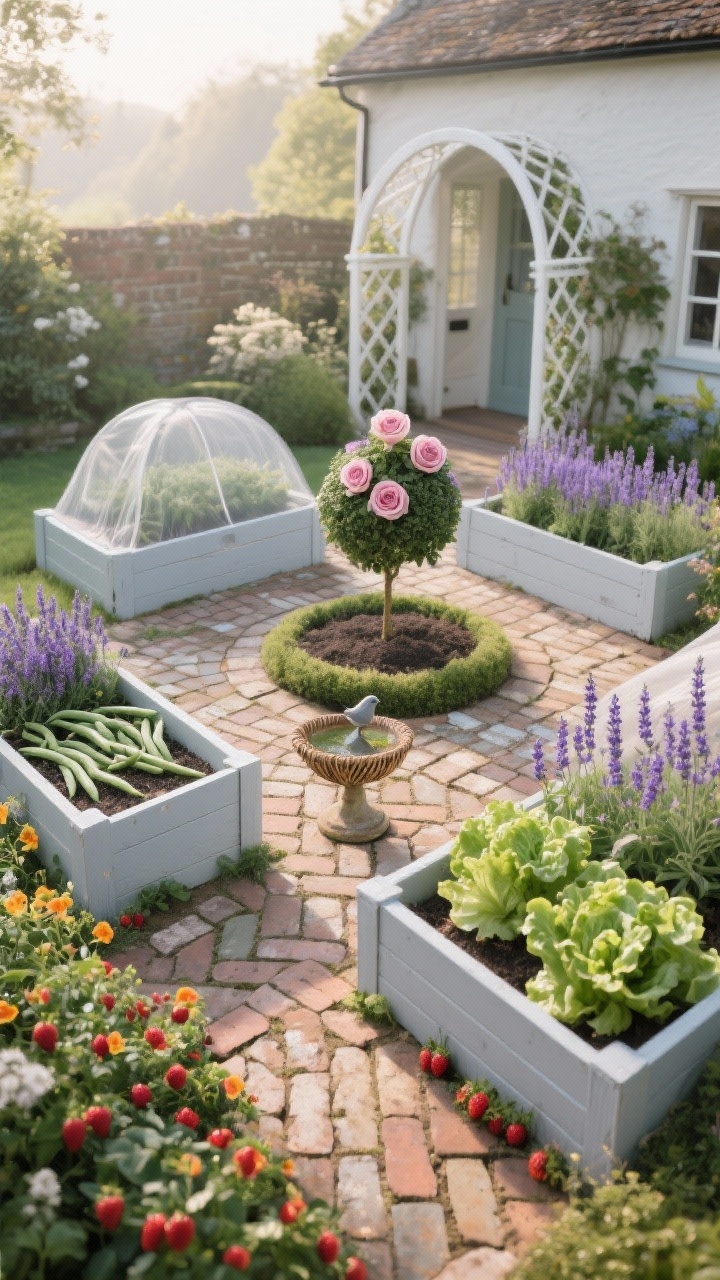
Think storybook charm: a classic French parterre, but relaxed and cottagey. Lay out four rectangular beds around a small circular center bed. Trim them with white-painted wood or soft gray composite to echo old garden borders.
Keep the center circular bed for a rose standard or lavender ball. The surrounding beds feel like quilt squares—varied textures but a coordinated palette.
- Plants: English lavender, dwarf beans, frilly lettuces, nasturtiums tumbling over edges, and strawberries.
- Paths: Brick herringbone or reclaimed pavers for that lived-in charm.
- Decor: A vintage birdbath, willow cloche covers, and a white trellis arch at the entry.
It’s romantic, fragrant, and purposeful. Every corner begs for a sun hat and a basket.
3. The U-Shaped Chef’s Station
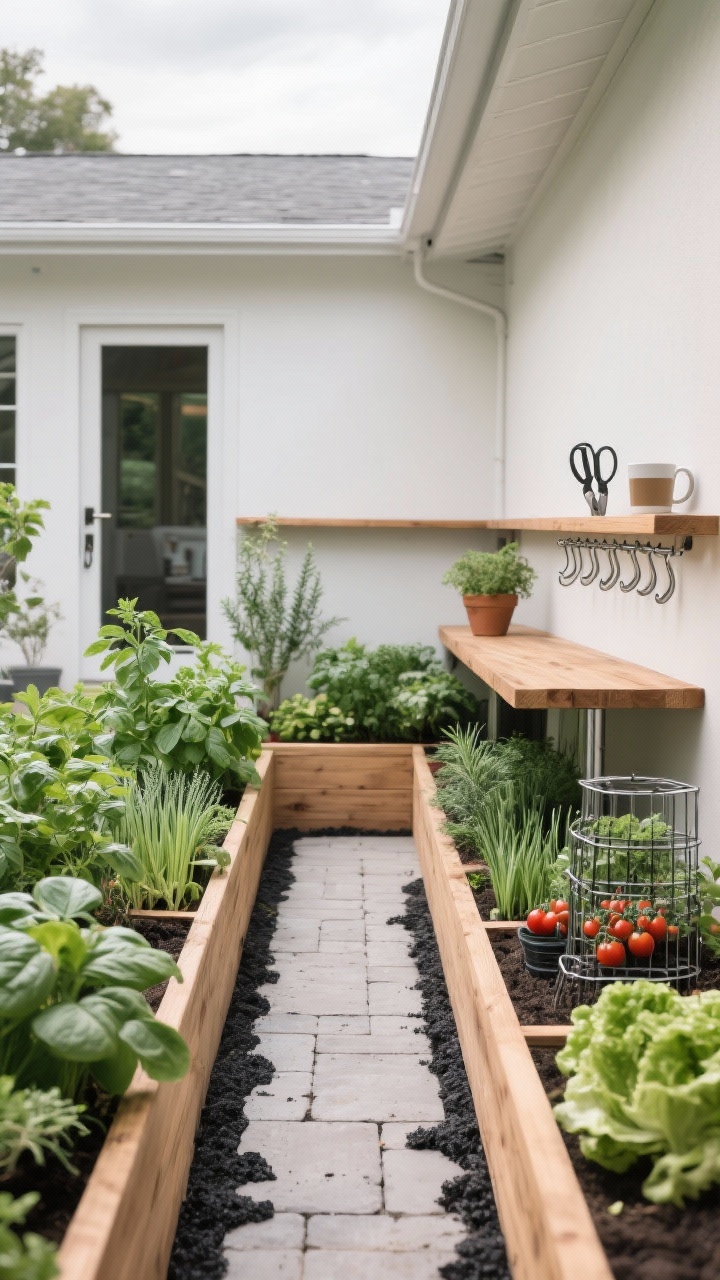
This layout wraps around you like a working kitchen. Build three beds to form a U-shape with a standing space in the center. Place the open end facing your back door for quick harvest runs while dinner’s on the stove.
Use natural cedar with a 20–24 inch height for comfy standing access. Add a narrow shelf along the top rails for shears and coffee mugs—yes, coffee counts as a gardening tool.
- Plants: Culinary powerhouses—basil, parsley, chives, rosemary, cherry tomatoes on compact cages, and cut-and-come-again lettuce.
- Paths: Smooth pavers or rubber mulch for easy pivoting and zero mud splashes.
- Decor: A slim potting bench at the closed end of the U, and stainless hooks for tools.
Everything’s within arm’s reach, and it looks like a gourmet garden studio. Practical, polished, and postcard-cute.
4. The Bee-Line Keyhole Garden
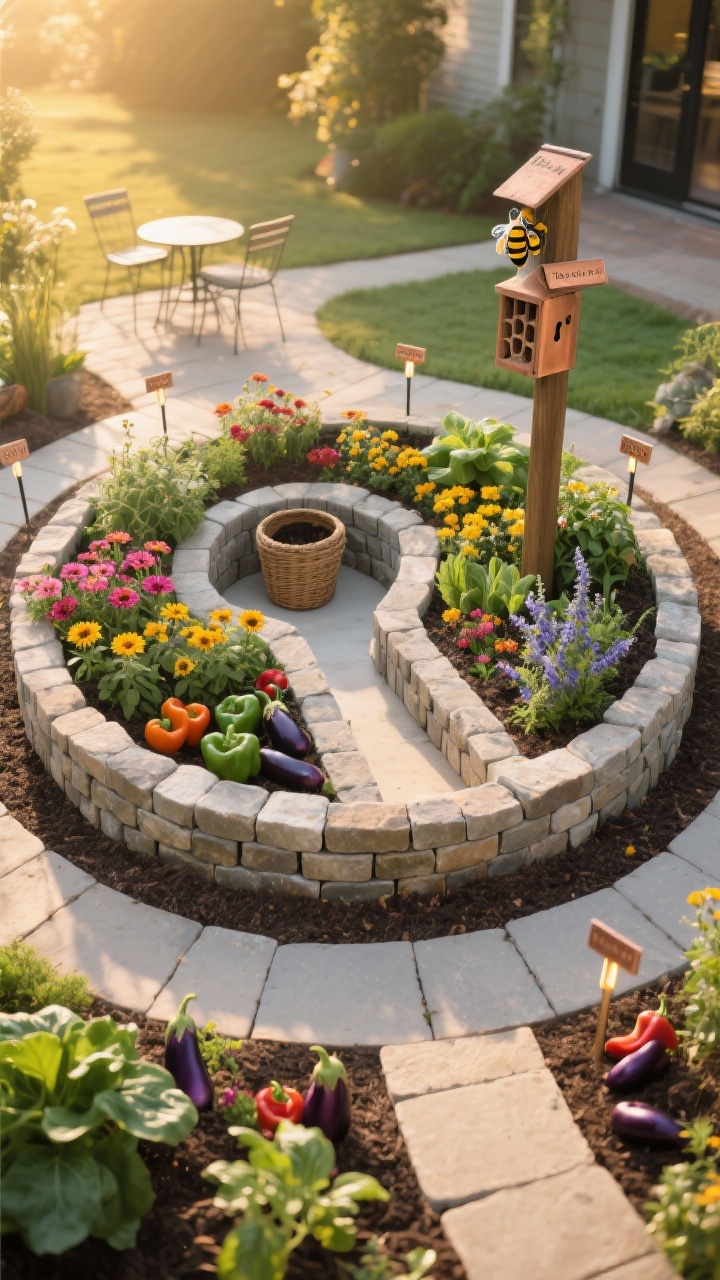
If you want maximum yield with minimal fuss, try a keyhole bed. It’s a circular raised bed with a notch that leads to a small center space, so you can reach every inch without stepping on the soil.
Build the ring from stone blocks or gabion baskets for a sturdy, sculptural presence. The center can hold a compost basket or a decorative urn—up to you.
- Plants: Pollinator magnets—zinnias, calendula, borage—mixed with peppers, eggplants, and leaf greens.
- Paths: Mulched spokes radiating out to a sunny seating area with a bistro set.
- Decor: Bee hotel on a post, copper plant labels, and solar stake lights outlining the keyhole shape at dusk.
It’s efficient, ecological, and visually striking—like a living sundial for bees.
5. The Terraced Hillside Theater
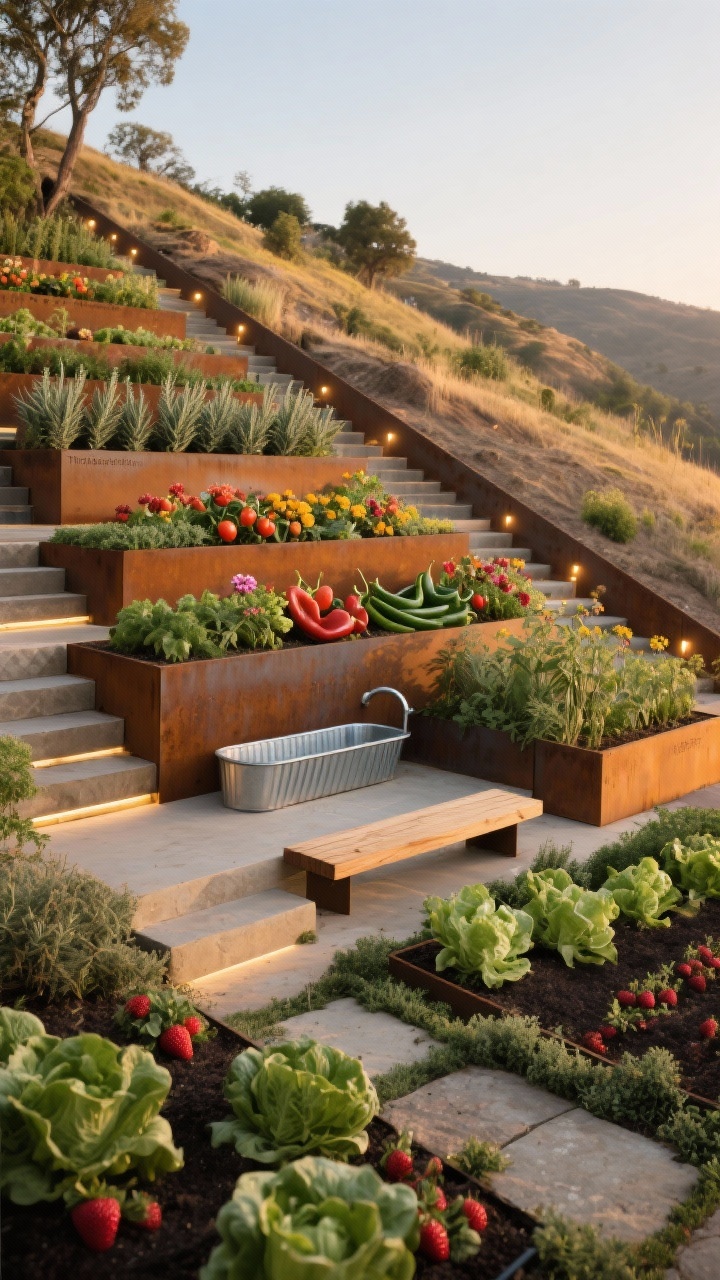
Got a slope? Turn it into a showpiece. Stack tiered raised beds like a mini amphitheater, each terrace held by corten steel or chunky timber. The stepped look gives you layered drama and perfect drainage.
Stair treads cut diagonally let you switch levels without trekking around the whole bed. Keep heights consistent per tier so the composition reads like architecture.
- Plants: Top tier for heat lovers (rosemary, sage, cherry tomatoes), mid tier for peppers and zinnias, lower tier for lettuces and strawberries.
- Paths: Stone risers with thyme creeping between joints.
- Decor: Low-voltage step lights, a slim bench halfway up, and a galvanized watering trough as a statement planter.
The result is dynamic from every angle, especially at golden hour when the textures glow.
6. The Oval Orchard Room
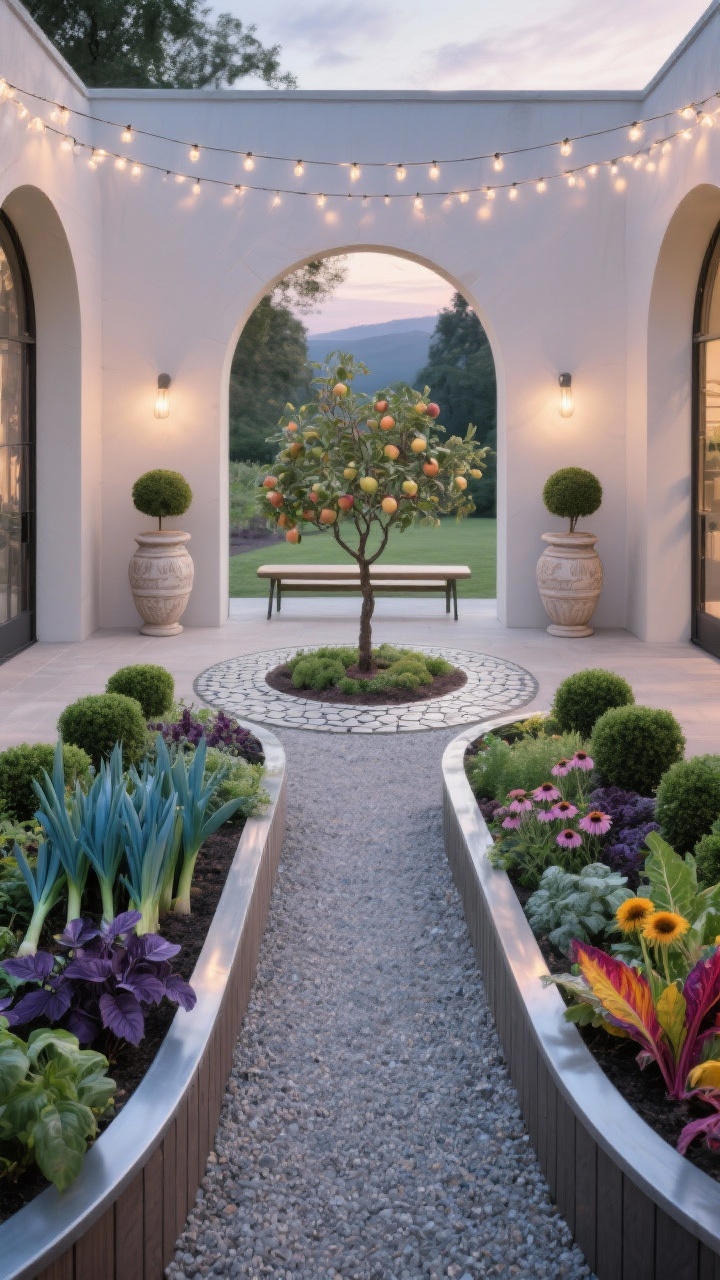
Create a soft, elegant scene with two long oval beds facing each other, framing a central aisle. At the far end, anchor the view with a dwarf fruit tree in a circular bed—a living “garden room” that invites you in.
Use curved aluminum edging or flexible composite boards to get smooth, uninterrupted lines. The oval shape keeps everything flowing and feels surprisingly spacious.
- Plants: Edible-meets-ornamental—blue-green leeks, purple basil, rainbow chard, echinacea, and low boxwood nubs at the ends.
- Paths: Fine gravel aisle with a round stone mosaic at the focal point under the tree.
- Decor: Two matching urns at the entry, arched string lights overhead, and a slim café bench beneath the fruit tree.
This one brings soft romance with a structured backbone—garden therapy you can nibble.
7. The Family-Friendly Maze Garden
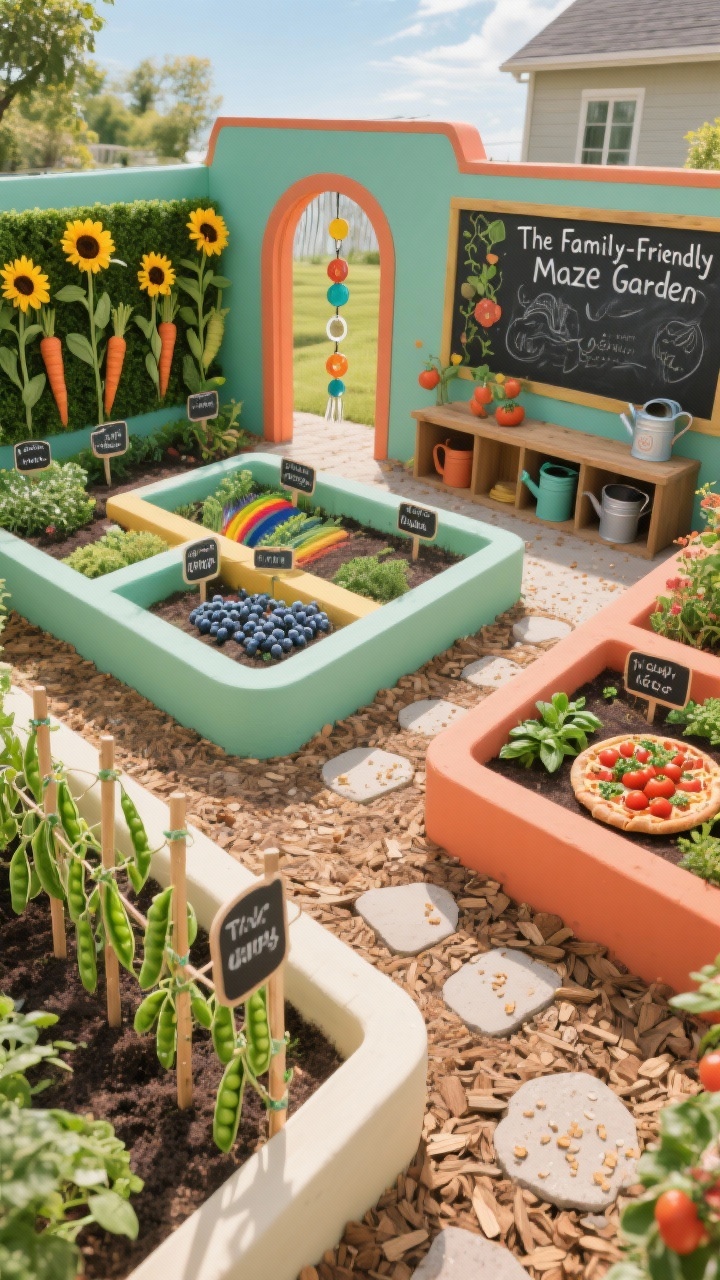
Make it playful and practical with staggered L-shaped beds arranged like a mini maze. The paths twist just enough to feel fun, but everything is still reachable for little hands and big harvests.
Use painted raised bed frames in complementary colors—sage, terracotta, and cream—to help each “room” feel distinct. Keep edges softly rounded for safety and style.
- Plants: Snap peas on short trellises, sunflowers as living walls, rainbow carrots, dwarf blueberries, and a pizza garden zone (tomatoes, basil, oregano).
- Paths: Wood chips with stepping stones set like breadcrumbs.
- Decor: Chalkboard plant signs, a low storage bench for watering cans, and a whimsical rain chain at the entrance.
It’s a layout that gets kids excited, keeps adults organized, and looks delightfully lively from the patio.
Pro tip for any layout: add a consistent border material (steel edging, brick soldier course, or cedar edging) and repeat a few plants across beds to tie the whole space together. A little repetition makes the garden feel designed—not just planted.
Ready to break ground? Pick the layout that matches your vibe, sketch it on graph paper, then mark it out with rope and stakes to test scale. Once those beds go in, you’ll have a backyard that’s not just productive—but downright beautiful.